Tile Ultra: The Ultra-Wideband Tracker That Never Shipped
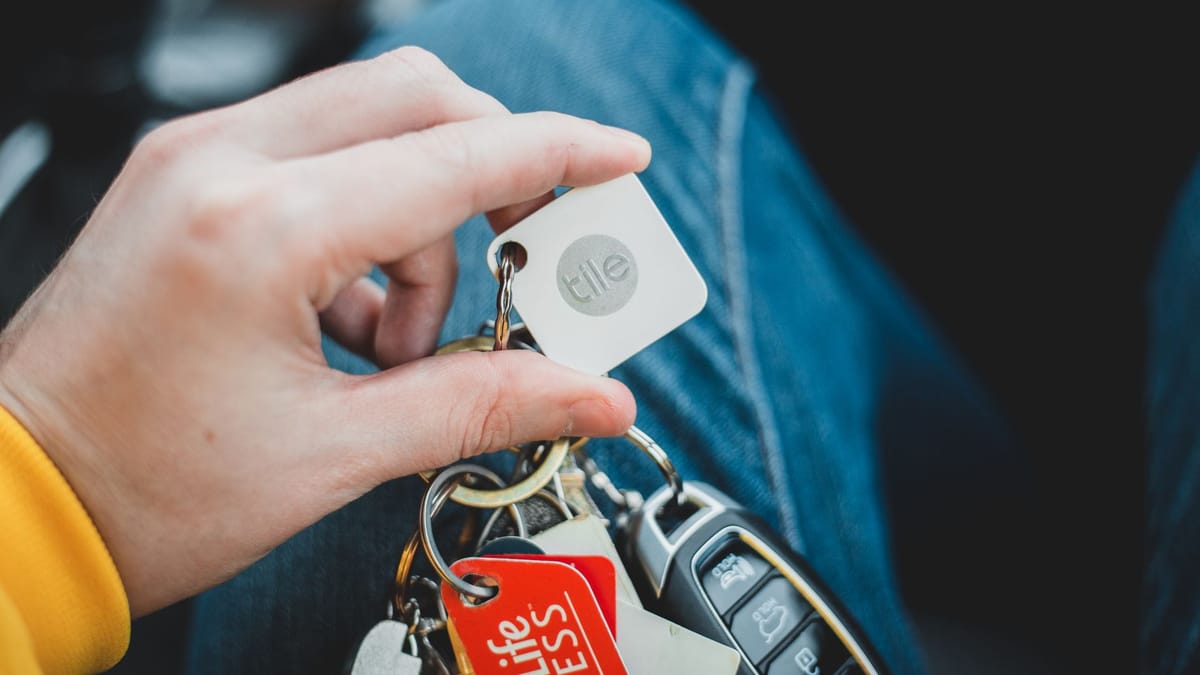
In October 2021 Tile announced a product called Tile Ultra, its first ultra-wideband tracker, promising augmented-reality directions to a mislaid item and full support on both iOS and Android. It was scheduled for early 2022. It never arrived. Life360, which acquired Tile, launched a refreshed lineup in September 2024 with an integrated SOS feature and no ultra-wideband, and the company’s current support documentation lists no such model. Anyone searching for a Tile Ultra review is searching for a review of vapourware, so this is an account of what happened and what is genuinely on sale.
Status check, verified against Life360 documentation
- Tile Ultra: announced October 2021, never released, absent from Life360’s current model list
- Current 2024 models: Pro, Mate, Slim and Sticker, all SOS-capable
- No model in the range supports ultra-wideband direction finding
- Tile Pro range: 500ft, with a replaceable one-year battery and IP68 rating
- Mate and Slim: 350ft, Sticker 250ft, all with three-year non-replaceable batteries
The announcement, and the four years of silence after it
Engadget’s coverage of the October 2021 unveiling described the headline feature as Point and Locate, using augmented reality to give turn-by-turn directions to a lost item, with Tile working alongside Google to optimise the effect on Android 12 devices. The pitch was straightforward and, at the time, genuinely differentiated: Apple’s AirTag had UWB but only worked properly with iPhones, and Samsung’s tags were similarly locked to their own platform. A cross-platform UWB tracker would have been the first of its kind.
It did not happen. When Life360 refreshed the Tile line in September 2024, the press release led on an integrated SOS feature rather than precision finding, and contemporaneous coverage noted the new trackers shipped without ultra-wideband and without Google Find My Device support. Trusted Reviews’ assessment of the 2024 Mate identifies the lack of ultra-wideband direction finding as a core weakness, making precise indoor location difficult.
What Life360 actually sells
- Tile Pro: 500ft range, IP68, one-year replaceable battery, SOS-capable
- Tile Mate: 350ft range, IP68, three-year non-replaceable battery, SOS-capable
- Tile Slim: 350ft range, IP68, three-year non-replaceable battery, designed for wallets
- Tile Sticker: 250ft range, IP68, three-year non-replaceable battery, adhesive mounting
- Also listed: a GPS pet tracker and a Pet Tag, which are separate products on a different technology
- Earlier 2022-generation models remain supported with shorter ranges of 250 to 400ft and an IP67 rating, but lack SOS
The Georgia Tech findings are the more important story
In September 2025 researchers at the Georgia Institute of Technology published an analysis of Tile’s protocol that raises serious questions about the platform. Their central finding is that Tile broadcasts an unencrypted static MAC address alongside a rotating unique ID. Because the MAC address does not change, the rotation provides no protection. As the researchers put it, an attacker needs to record only one message from the device to fingerprint it for the rest of its lifetime.
The report further alleges that the broadcast information, including MAC address, unique identifier and location data, travels unencrypted over Bluetooth and is stored in plaintext on Tile’s servers, which would allow continuous location monitoring by Life360 itself. Life360’s response stated that improvements had been made since the researchers disclosed their findings in November 2024, but did not specify what those changes were. Separately, a Tile data breach has been reported affecting user data.
This is not a theoretical concern for a product whose entire purpose is to be attached to possessions people carry.
Anti-theft mode protects the wrong person
Tile’s anti-theft mode hides a tracker from the scanning features designed to detect unwanted trackers, on the reasoning that a thief should not be able to find and discard the tag. The consequence is that a stalker gains the same invisibility while the person being tracked loses the ability to detect the device. Life360 gates the feature behind government ID verification and an agreement to a one million dollar penalty for misuse, which is a deterrent of unclear enforceability.
The ordinary scan is also weaker than the competition’s. Malwarebytes’ summary of the research notes that Tile’s anti-stalking scan requires manual activation and ten minutes of continuous movement to function, against rival platforms that alert automatically. For a mainstream buyer, that combination is the strongest argument against the ecosystem regardless of which model is chosen.
Judging the network on its actual size
Tile’s finding network is the reason to buy into the platform, and Trusted Reviews puts it at around 70 million devices, smaller than Apple’s or Samsung’s equivalents. In dense urban areas that is sufficient, and the cross-platform support is a real advantage for households mixing iPhones and Android handsets. In rural areas the difference in coverage becomes the deciding factor, and the same review found real-world connectivity struggling beyond about 35 metres despite a 100m claim on the Mate.
The subscription structure adds another consideration: location history and an item reimbursement scheme of up to £73 sit behind a paid tier, with a higher tier offering ten times that cover. Buyers should price the tracker and the subscription together, then weigh both against the security findings above.
There is a further structural issue. Life360’s 2024 lineup shipped without support for Google’s Find My Device network, which means Android users get Tile’s own network rather than the far larger one built into their phones. On iOS the situation is the mirror image, with Apple’s Find My network unavailable to third-party tags of this kind. Tile’s cross-platform pitch therefore delivers a consistent experience on both platforms by being smaller than the native option on each.
Taken together, the picture is of a company that announced an ambitious product, did not ship it, and has since been overtaken on precision finding, network scale and security practice. For most buyers the honest recommendation is the tracker native to their phone platform, with Tile reserved for the specific case of a genuinely mixed household that values one app over network reach.
Sources: Engadget, Tile’s first ultra-wideband tracker announcement · Life360 support, Tile models and specifications · Malwarebytes, Tile trackers plagued by weak security · Trusted Reviews, Tile Mate (2024) review · PR Newswire, Life360 launches new Tile tracker line with SOS