The Anker SOLIX C800 Is Out of Production and Undercut by Its Own Successor
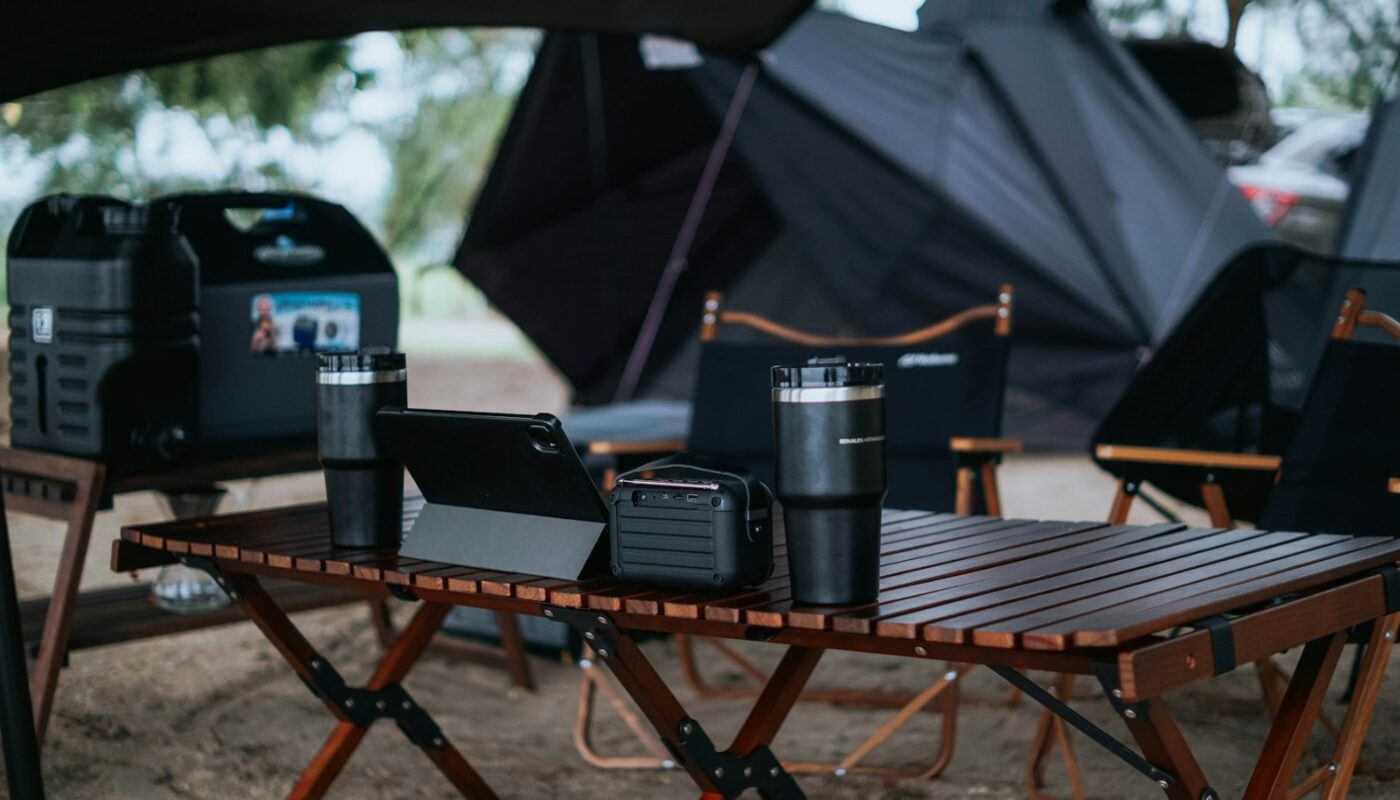
This needs stating before anything else. The Anker SOLIX C800 is no longer in active production, is effectively sold out, and has been superseded by the SOLIX C800X. Backup Power Hub’s comparison reports the C800 as discontinued while still carrying a 799 US dollar catalogue listing, against $379 for the C800X. Anyone reading this because they are about to buy a C800 should stop and look at the newer model instead. What follows explains what the C800 was, what the C800X changed, and the criticisms that carry across both.
Availability and pricing, as verified
- SOLIX C800: no longer in active production, listed at 799 US dollars in Anker’s catalogue
- SOLIX C800X: the current replacement, listed at 379 US dollars
- Both units: 768Wh LiFePO4, 1,200W rated output, 1,600W surge via SurgePad, 300W solar input
- Both units: 10 outlets, 3,000 charge cycles, app control
- C800X adds a built-in storage compartment and HyperFast recharging
Why the C800 listings you are seeing are misleading
Portable power stations linger in retail channels long after a manufacturer has moved on, and the C800 is a textbook case. Anker’s own site still carries a combined C800 Plus and C800 landing page, which makes the product look current, while the actual buying situation is that new stock is scarce and the catalogue price is more than double what the replacement costs. Discounted C800 units have circulated at around 299 US dollars, which is a genuinely different value proposition to 799, but stock at that level is intermittent and unsupported by a manufacturer commitment.
The risk is not that the C800 is a bad unit. It is that a buyer pays a premium for an older, slower-charging product because the listing does not say it has been replaced. That is the situation this article exists to correct.
What the C800X keeps and what it changes
- Unchanged: 768Wh capacity, 1,200W rated AC output, 1,600W surge protection, 300W solar input, 10 outlets, 3,000 cycles and app control
- Changed: full recharge in 58 minutes on the C800X, against roughly 2.3 hours to 80% on the C800
- Added: a built-in storage compartment for cables, which the C800 lacked
- Price: 379 US dollars against a 799 dollar catalogue listing for the outgoing model
- Net effect, in Backup Power Hub’s assessment: the same battery, output and solar compatibility for less than half the cost
The charging difference is the one that changes how it gets used
Anker rates the C800X for a full charge in 58 minutes using its HyperFast mode, and quotes 1,100W AC recharging on the closely related C800 Plus, which reaches full in the same 58 minutes once its UltraFast mode is engaged. Trusted Reviews, testing the Plus, found the default charging mode ran at 750W and took just over an hour and a half, with the 58-minute figure achievable after the unit had cooled. That caveat is worth carrying: the headline number is a best case, not a typical one.
The reason this matters more than a specification comparison suggests is that a sub-hour recharge changes the pattern of use. A unit that tops up in an hour can be refilled from a generator or a brief mains opportunity during a power cut. A unit that needs two and a half hours often cannot.
Efficiency and noise, measured rather than claimed
Trusted Reviews measured round-trip efficiency on the C800 Plus at 77.1% for AC output and 78.3% for USB, describing the result as fairly good but ultimately disappointing next to Anker’s own C1000. That figure deserves attention because it is the number nobody advertises. It means that of 768Wh stored, roughly 592Wh reaches an AC appliance. Charging efficiency from the mains was measured separately at 90.2%.
The same review found the cooling fans loud and quite high-pitched, harder to ignore than competing designs. In a garage during an outage that is irrelevant. Inside a tent, or in a room where someone is trying to sleep, it is the complaint that will surface first.
The battery chemistry is the part that ages best. Both units use LiFePO4 cells rated at 3,000 cycles, which Anker frames as up to ten years of everyday use and guarantees. That is a genuine advantage over the older lithium-ion designs that dominated this category, and it is the reason a power station bought now has a plausible decade of service rather than three or four years.
What 1,200W and 10.9kg actually rule out
Trusted Reviews is direct that the unit lacks the grunt for demanding devices, naming kettles and microwaves specifically. That is the correct expectation to set. A 1,200W rated output with a 1,600W surge covers laptops, phones, routers, lighting, a fridge, a CPAP machine, small power tools and a television. It does not cover most kettles, most microwaves, hair dryers, or anything with a resistive heating element of consequence.
Weight is the other constraint. At 24lb, or 10.9kg, the same review judges it too heavy to carry any real distance and unsuitable for hiking or cycling trips. This is a car-camping and home-backup product. Read against those limits, and bought as a C800X rather than a C800, it is a sensible piece of kit at $379. Bought as a C800 at catalogue price, it is not.
Solar input is capped at 300W on both models, which is the specification most likely to disappoint anyone planning off-grid use. Filling 768Wh at 300W under ideal conditions takes upwards of three hours, and real panels in British light rarely deliver their rated output. Anyone treating this as a self-sufficient system rather than a rechargeable buffer should size expectations accordingly.
Sources: Backup Power Hub, Anker SOLIX C800X versus C800 · Anker SOLIX Canada, C800X product page · Anker SOLIX, C800 Plus and C800 product page · Trusted Reviews, Anker SOLIX C800 Plus review