Moraine Lake stopped taking cars, and Banff kept breaking its own records
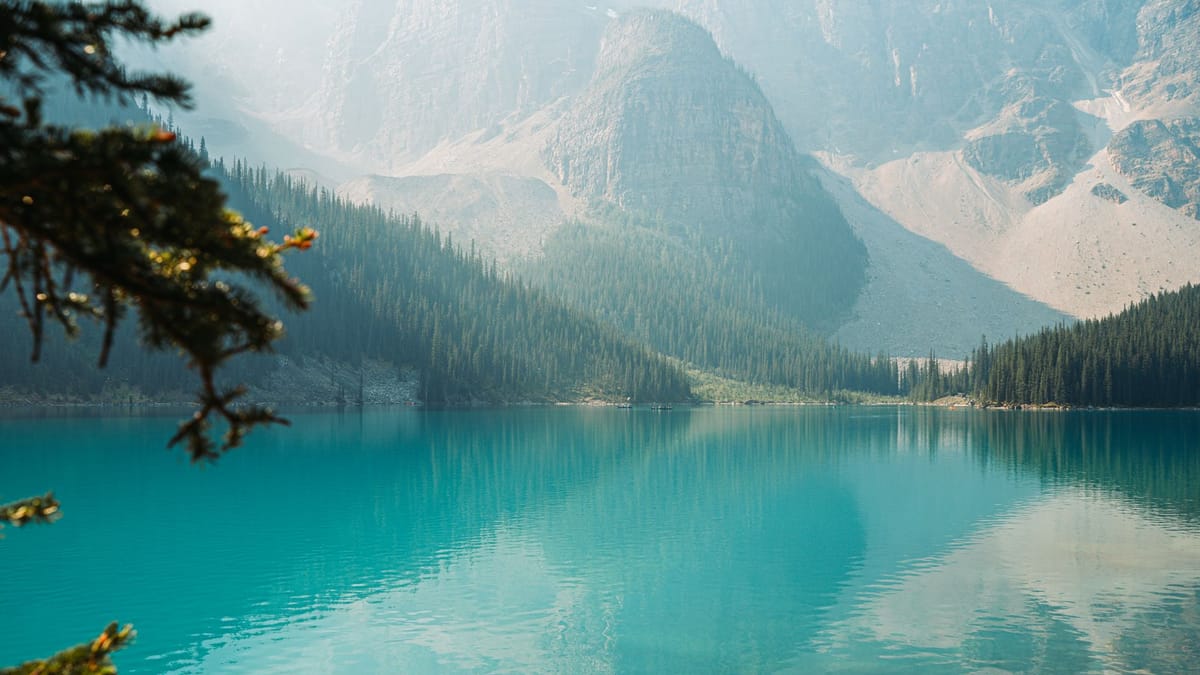
Banff National Park now records more than four million visits a year and broke its own attendance record again in 2025. That pressure lands disproportionately on two lakes, and Parks Canada’s answer has been to remove the option of driving to one of them entirely. Since June 2023 no private vehicle has been permitted on the Moraine Lake road. Anyone who wants to see the Valley of the Ten Peaks reflected in that particular shade of glacial blue now books a seat months in advance or does not go, and the booking system has its own rules worth learning.
Dates that decide a Banff trip
- Parks Canada shuttles run 15 May to 12 October 2026 for Lake Louise, from 1 June for Moraine Lake
- Reservations open 15 April 2026 at 8am Mountain Time
- 40% of seats release at launch; 60% on a rolling 48-hour window
- Canada Strong Pass gives free Parks Canada admission from 19 June to 7 September 2026
- Paid parking applies at Lake Louise lakeshore from 3am to 7pm through the season
Why Moraine Lake road closed to cars
Parks Canada’s stated reasoning is straightforward. Parking at Moraine Lake was very limited, drivers circled and queued on a narrow mountain road waiting for spaces, and the combination created genuine safety problems alongside a poor experience for everyone involved. Personal vehicle access ended on 1 June 2023 and has not returned.
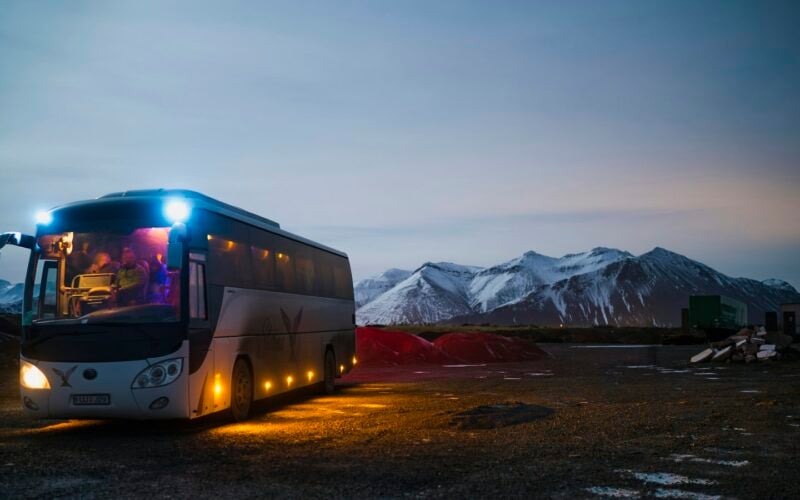
The lake itself is unchanged, which is the point. What has changed is that reaching it requires a Parks Canada shuttle, a commercial shuttle from operators including Moraine Lake Bus Company, Fairview Limousine, Lake Louise Shuttle Company and Mountain Park Transportation, a guided tour, or a taxi. Cycling the road is permitted and is a serious climb.
Lake Louise has not been closed to cars, but its lakeshore lots are small, charge for parking from three in the morning until seven in the evening, and reliably fill before most visitors have had breakfast. Vehicles longer than twenty feet or wider than seventy-nine inches are barred from the lakeshore lots entirely, which catches out a great many motorhomes.
How the shuttle booking system actually works
The Park and Ride is in the car park of the Lake Louise Ski Resort at 1 Whitehorn Road, not at the lake itself, and this catches people out every season. Regular departures run from about 6.30am to 5pm, with dedicated Alpine Start services at 4am and 5am for those who want Moraine Lake at sunrise, which is the light everyone has seen in photographs.
- Reservations for the 2026 season open on 15 April at 8am Mountain Time through the Parks Canada Reservation Service, online or on 1-877-737-3783.
- Create an account before the opening moment; social sign-in through Google or Facebook is now supported and saves time at launch.
- Only 40% of seats are released in that first window, so missing it is not fatal.
- The remaining 60% release on a rolling basis 48 hours before each departure, at 8am Mountain Time, and this is where most last-minute seats are found.
- A reservation includes free parking at the Lake Louise Park and Ride and unlimited use of the connector shuttle between the two lakes.
- A national park entry pass is required separately and is not included in the shuttle fare.
Free admission returns for the Canada Strong Pass window
For 2026 the Canada Strong Pass runs from 19 June to 7 September and gives free admission to all Parks Canada national parks, historic sites and marine conservation areas, along with a twenty-5% discount on camping fees. There is no physical or virtual pass to obtain or present; visitors simply arrive.
The scheme extends beyond parks. National museums are free for under-eighteens and half price for eighteen to twenty-four year olds, provincial and territorial museums offer comparable discounts, and VIA Rail carries children under eighteen free when accompanied by an adult with a quarter off fares for young adults.
Two caveats matter in Banff specifically. Free admission does not mean free parking, and the paid lots at Lake Louise and along the Icefields Parkway charge as normal. Nor does it remove the shuttle reservation requirement, which is a separate system with separate capacity.
Roam buses reach further than most visitors realise
Roam Public Transit operates a network that covers considerably more of the park than day visitors tend to assume. Local routes serve Sulphur Mountain, Tunnel Mountain, the Cave and Basin and Lake Minnewanka, and regional routes run to Canmore, to Johnston Canyon on route 9 and to Lake Louise on the 8X express.
The Minnewanka Park and Ride operates from late June to early September and lets day trippers leave a vehicle and explore without it. Outbound departures from the Park and Ride are free for everyone; the return leg carries a per-person fare.
Downtown Banff parking is limited and the free Train Station lot typically fills by mid-morning. Parks Canada’s own advice to campground guests is to use transit rather than drive, which is a reasonable indication of how the town centre performs in August.
Johnston Canyon and the catwalk problem
The Johnston Canyon lower and upper falls trail is among the most photographed short walks in Canada and is served by steel catwalks bolted to the canyon wall. It is spectacular, it is short, and between roughly nine and five in summer it is a queue moving at the pace of its slowest member on a walkway that is too narrow to overtake on.
The Roam route 9 service exists specifically because the car park could not cope. Taking the bus removes the parking problem entirely and is the recommended approach.
The Ink Pots, a further three kilometres and 200 metres of climb beyond the upper falls, shed almost all of the crowd and open into a meadow of mineral springs. Visitors consistently report this as the better half of the walk, and most people never see it.
Wildlife rules that are not suggestions
- Parks Canada requires visitors to stay at least 100 metres from bears, cougars and wolves, and at least 30 metres from elk, deer, sheep and other large animals.
- Bear spray is standard equipment on backcountry trails in the Bow Valley, and knowing how to deploy it matters more than carrying it.
- Elk are genuinely dangerous during the autumn rut and the spring calving season, and cause more visitor injuries in Banff than bears do.
- Food, rubbish and scented items must be stored in vehicles or bear lockers rather than left at a campsite.
- Stopping in traffic to photograph animals from a car window creates the bear jams that Parks Canada actively discourages and occasionally ticket.
Late September is the compromise nobody books
Banff’s peak runs from late June to early September, and it is intense. July and August bring the crowds, the highest accommodation rates in the Rockies and the greatest likelihood of shuttle seats being unavailable at short notice.
The second half of September is the argument against all of that. The larches turn gold in the Lake Louise and Moraine Lake basins in roughly the third week, an event that has developed its own weekend rush but leaves the weekdays comparatively quiet. Daytime temperatures remain workable, the shuttle is still running until 12 October, and rates fall as soon as the Labour Day weekend passes.
Winter is a different park rather than a diminished one. The Icefields Parkway becomes a serious drive requiring winter tyres and careful weather checking, Moraine Lake road is closed altogether, and the frozen lake at Lake Louise carries a skating rink. Visitor numbers in January are a fraction of July’s, which for some people is the entire recommendation.
Sources: Parks Canada: Lake Louise and Moraine Lake shuttle FAQ · Banff and Lake Louise Tourism: Moraine Lake shuttle · Government of Canada: about the Canada Strong Pass · Parks Canada: getting around Banff · CBC News: Banff National Park breaks visitation record