Lisbon’s funiculars have been silent since September 2025
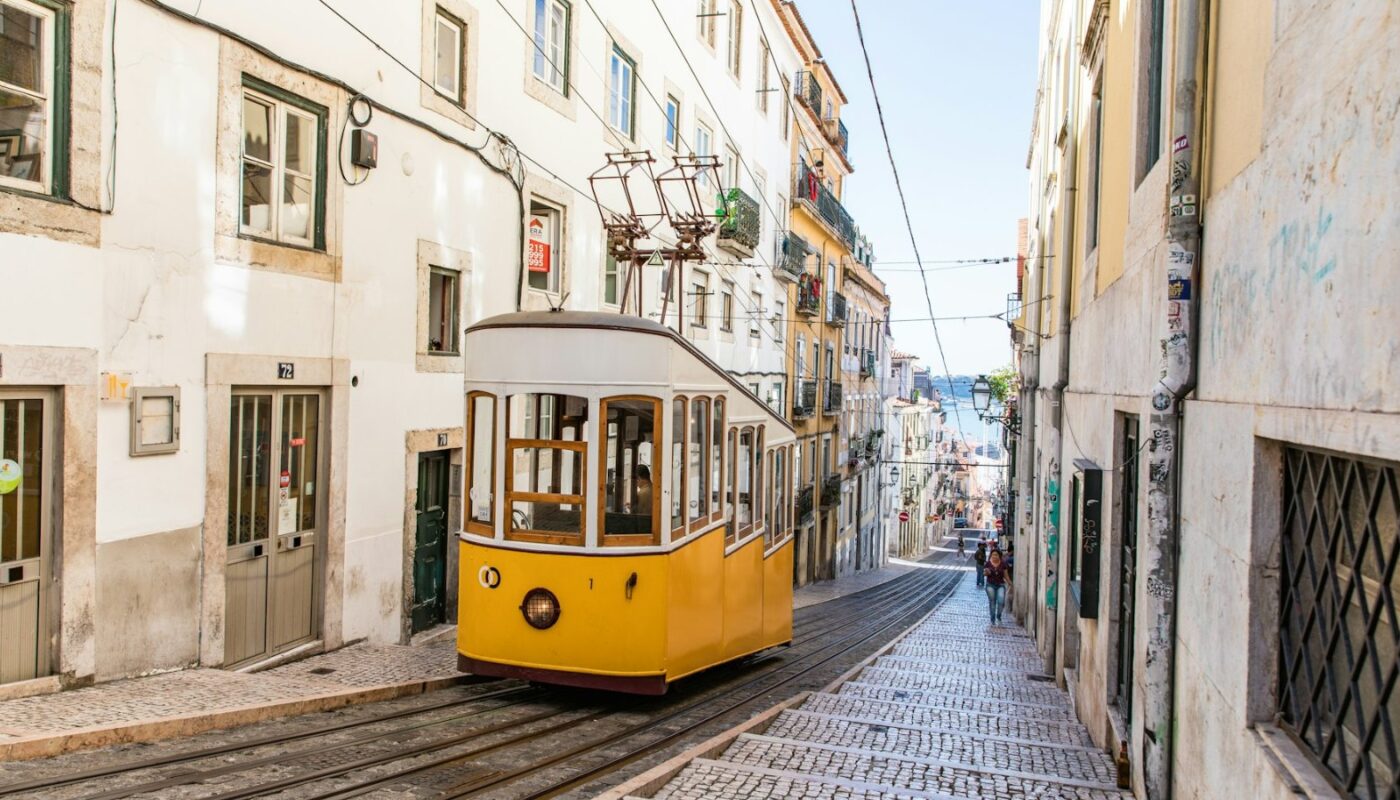
On the evening of 3 September 2025 the Ascensor da Gloria derailed on the steep hill between Restauradores and the Bairro Alto, killing sixteen people. It was the worst transport accident in Lisbon in living memory, and its consequences are still visible to anyone visiting the city. The funiculars that climb Lisbon’s hills, among the most photographed pieces of urban machinery in Europe, have not carried passengers since. Any guide to Lisbon written before that date is now describing a city that no longer quite exists.
What the inquiry found on the Calcada da Gloria
Portugal’s transport accident investigation body, the GPIAAF, established in its preliminary report that the cable connecting the two cabins failed at its attachment point to the upper car. The October report went considerably further, finding that the cable did not comply with the required specifications and that no testing or oversight had been carried out by the operator, Carris, before it was installed.
The inquiry recommended that Lisbon’s funiculars remain closed until they could be declared fully safe. A technical team was assembled to develop new safety mechanisms and determine when service might resume. As of the middle of 2026 the Gloria remained suspended with no reopening date announced, and independent guides to the city were still recording it as closed.
Visitors should check the Carris website directly before planning around any of the historic lifts. The situation is under active review and the position may change, but a guidebook or a booking platform is not a reliable source on this particular question.
The four euro nightly tax and where it lands
Lisbon’s municipal tourist tax doubled from two euros to four euros per person per night in September 2024, and remains at that level. It applies to guests aged thirteen and over in all licensed accommodation, including hotels, hostels, guesthouses and the alojamento local short-term rentals that make up a substantial share of the city’s beds.
The charge is capped at seven consecutive nights, giving a maximum of twenty-eight euros per guest per stay. Children under thirteen are exempt, as are guests with recognised disabilities of 60% or above with documentation, and people visiting for medical treatment along with one companion. It must be shown separately on the invoice and is not subject to VAT.
Whether it is visible at booking varies. Some platforms include it in the displayed total and others collect it at check-in, which is the most common cause of the mild surprise at the front desk.
Tram 28 is a commuter route that was overrun
The 28 is a working Carris tram line running from Martim Moniz through Graca, Alfama, Baixa, Chiado and Estrela to Campo de Ourique, on wooden-seated Remodelado cars dating from the 1930s. It was never designed as a sightseeing service and it still carries residents who have no alternative.
In practice it is now boarded to capacity at Martim Moniz by visitors who then occupy it for the full route, and pickpocketing on the line is sufficiently organised that Carris posts warnings in the carriages. The experience most people are hoping for, a rattling ride through narrow streets with a view, is genuinely available at seven in the morning and essentially unavailable between ten and six.
The 12 follows a shorter loop through some of the same streets and is far less crowded. The 24 to Campolide and the 15 to Belem are also historic or semi-historic services on quieter routes.
- Board the 28 at Martim Moniz or Campo de Ourique, the two termini, since intermediate stops are frequently passed by full trams.
- A Viva Viagem card loaded with zapping credit is substantially cheaper than buying single tickets from the driver.
- The 24-hour Carris and Metro pass covers trams, buses, the metro and the surviving lifts, and pays for itself in about four journeys.
- The Santa Justa lift charges a separate and steep fare for what is effectively a queue; the free walkway from Largo do Carmo reaches the same viewing platform.
- Tram tickets bought on board cost roughly three times the card fare, which is the main reason visitors overpay for transport in Lisbon.
Alfama’s staircases are the actual attraction
Alfama survived the 1755 earthquake largely intact, which is why its street plan is medieval and illogical where the Baixa below is a rational grid. It is a district of stairs, blind alleys and washing lines, and the correct way to see it is to get lost in it rather than to follow a route.
The fado houses along the main lanes vary enormously. Establishments with a doorman waving menus at passers-by are generally offering a set dinner with a short performance for tourists; the smaller places that require a booking and do not advertise are where the singing is taken seriously. The Museu do Fado near Santa Apolonia is a useful hour before deciding which to attend.
The miradouros, the terraced viewpoints scattered across the hills, are Lisbon’s genuine public asset. Senhora do Monte and Graca sit above Alfama, Santa Catarina above Bica, and Sao Pedro de Alcantara at the top of the closed Gloria funicular route, which is still reachable on foot up the Calcada.
Belem is a half day and a queue
Belem holds two UNESCO-inscribed monuments, the Jeronimos Monastery and the Torre de Belem, both listed in 1983 and both built from the wealth of the Portuguese maritime expansion. The monastery’s cloister is the more impressive of the two by a considerable margin, and the tower’s interior is small enough that the queue routinely exceeds the visit.
The Pasteis de Belem bakery has been making its custard tarts to the same recipe since 1837 and the queue outside is for takeaway; the seated rooms inside are extensive and usually have space. The tarts are excellent and are not meaningfully better than those at several other Lisbon bakeries, which is a claim that will annoy people and is nonetheless widely made by residents.
The district is a half day, reachable on tram 15 or by train from Cais do Sodre. Combining it with the MAAT museum and the Coach Museum makes better use of the journey than the monastery alone.
The housing question behind the postcards
Lisbon has spent a decade converting residential stock into short-term rentals and hotels, aided by a golden visa scheme that channelled foreign capital into property until it was reformed. Rents in the centre have risen far beyond what local salaries support, and the resulting displacement is the most politically charged subject in the city.
Visitors encounter this indirectly. The absence of ordinary shops in parts of Baixa and Alfama, the volume of key-safe boxes bolted to doorframes, and the graffiti addressed specifically to tourists in English are all symptoms of the same process.
None of it means visitors are unwelcome, and Lisbon remains among the more genuinely hospitable capitals in Europe. It does make a case for staying in licensed accommodation, spending money outside the three or four streets everyone is directed to, and treating the city as somewhere people live rather than as a set.
Sources: Wikipedia: 2025 Ascensor da Gloria derailment · Al Jazeera: inquiry recommends Lisbon funicular trams stay closed · NBC News: cable connecting cabins failed in deadly Lisbon crash, report finds · Carris service alterations · EazyAL: Lisbon city tax 2026