Medellin’s reinvention is real. Its tourism problem is much newer.
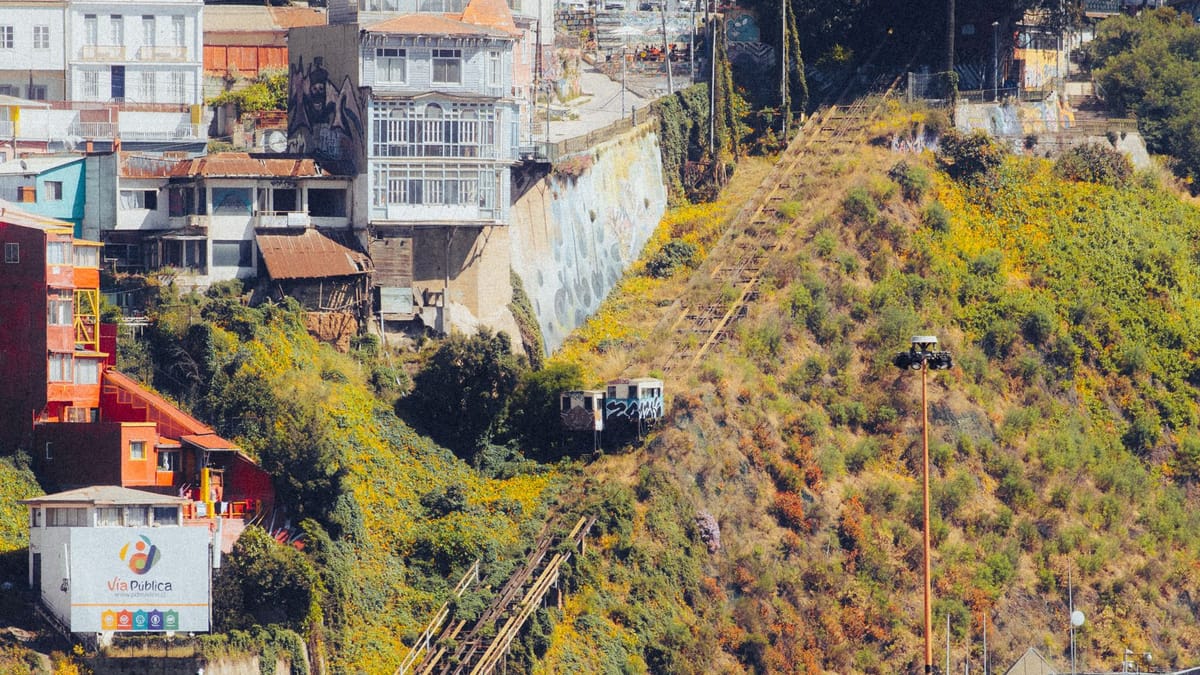
Few cities have rewritten their reputation as thoroughly as Medellin. The metro opened in 1995 into a city then considered close to ungovernable, and the cable cars strung up the valley walls a decade later turned transport policy into something closer to social repair. National Geographic put the city on its Best of the World list for 2026, and international arrivals have grown by around 17% in a year. That success has arrived faster than the city’s capacity to manage it, and the resulting frictions are worth understanding before booking.
Comuna 13 is now a queue with a soundtrack
The outdoor escalators built into the hillside of San Javier remain one of the most quoted pieces of urban infrastructure in Latin America, and the murals that cover the barrio’s walls are the visual shorthand for Medellin’s whole narrative. National Geographic’s editors described the neighbourhood as a demonstration of what the arts can do to a place, which is fair.
It is also, on a weekend afternoon, extremely crowded. What was a walking tour led by residents a decade ago has become a dense commercial corridor of stalls, hip-hop performances staged on a loop and guides competing for the same viewpoints. Visitors report that the experience differs enormously by time of day, and that a weekday morning bears almost no resemblance to a Saturday.
The neighbourhood’s residents have mixed views on this, and the honest position is that Comuna 13 is worth visiting and that the version most people see is heavily packaged. Booking with a guide who actually lives there, rather than one bussed in from El Poblado, is the difference between a history lesson and a photo stop.
The metro and its cables are the genuine achievement
Medellin operates the only metro system in Colombia, and it is treated locally with a protectiveness that surprises visitors. Carriages are clean, eating and drinking are not tolerated, and the network integrates with the Metrocable gondola lines that climb to hillside neighbourhoods the road network never reached properly.
For a traveller the practical consequence is that Medellin is one of the easiest large Latin American cities to move around without taxis. The system connects the airport bus terminals, Poblado, Laureles, the botanical gardens and the cable car interchanges on a single ticket structure, and it runs on time.
The city has continued to build on this logic, with library parks in underserved comunas and the Parques del Rio scheme reclaiming the river corridor as public space. These are not tourist attractions in any conventional sense, but they explain more about the city than any walking tour of Poblado will.
The drugging warnings are not scaremongering
The UK Foreign, Commonwealth and Development Office maintains specific and unusually detailed advice about drug-facilitated crime in Colombia. Criminals administer scopolamine and similar substances through food, drinks, cigarettes, aerosols and even paper flyers, and the British Embassy has repeatedly warned that foreign nationals are targeted deliberately rather than opportunistically.
Dating applications are named explicitly. Organised groups use them to isolate foreign visitors before robbery or assault, and encounters that begin in nightclubs, bars or ride-sharing vehicles feature heavily in reported cases. Short-term or express kidnapping, where victims are held long enough to empty their bank accounts, remains a documented pattern.
None of this makes Medellin unvisitable. It does mean that the risk profile is specific, aimed at a particular kind of visitor behaviour, and largely avoidable.
- Use licensed taxis booked through an app rather than hailing on the street, and avoid public transport late at night.
- Never accept a drink, cigarette or food from a new acquaintance, and do not leave a drink unattended.
- Treat dating app meetings with the same caution as any meeting with a stranger: public venue, daylight where possible, and someone who knows where you are.
- Carry a photocopy of your passport rather than the original, and leave visible valuables in the accommodation safe.
- Check the current FCDO or equivalent national advisory before travel, since regional guidance in Colombia changes more often than in most destinations.
El Poblado rents have followed the visitors uphill
Medellin now records the most expensive residential rents in Colombia, and the districts driving that figure are precisely the ones foreigners cluster in. El Poblado and Laureles have absorbed a large short-term rental inventory and a substantial population of remote workers, and the price effect on long-term tenants has been severe.
The city has also intervened on the sharper edge of this. In 2024 the mayor’s office banned sex work in parts of El Poblado and Laureles following a case in which a foreign tourist was found with minors, and enforcement against establishments catering to sex tourism has continued. Visitors should expect identity checks in hotels and a markedly less permissive environment than the city’s online reputation suggests.
For anyone staying more than a week, the argument for looking beyond Poblado is straightforward. Laureles is calmer and more residential, Envigado is cheaper and genuinely Colombian in feel, and both are on the metro.
Eternal spring is a marketing line with real meteorology behind it
Medellin sits at roughly 1,500 metres in the Aburra valley, which gives it daytime temperatures in the low twenties Celsius for most of the year and almost no seasonal variation. The nickname is earned, and it is the practical reason the city attracts long-stay visitors in a way that coastal Colombia does not.
What the climate does have is rain, concentrated in roughly April to May and again from September to November. Afternoon downpours are heavy and short, and they flood the same underpasses every year. December through February is the driest and the busiest, and the Feria de las Flores in early August fills the city entirely.
The food scene has caught up with the attention. Restaurants in the city have entered Latin American rankings in recent years and two Medellin bars have appeared on international bar lists, which would have been unimaginable a decade ago. The traditional bandeja paisa remains enormous, cheap and available everywhere, and is still the better introduction.
Sources: UK FCDO travel advice: Colombia safety and security · Forbes: how Medellin became one of 2026’s top travel destinations · NBC News: Medellin bans sex work in two areas · France 24: Colombia’s Medellin acts against sex tourism