Cartagena’s walls were built against pirates and now hold in the heat
Spain began walling Cartagena de Indias in 1586 after a succession of raids made it clear that the richest transit port on the Spanish Main could not defend itself. What followed was two centuries of military engineering, and the result was inscribed by UNESCO in 1984 as the Port, Fortresses and Group of Monuments of Cartagena. The listed area covers 192 hectares and constitutes the most extensive fortifications on the continent. Standing on them at six in the evening, with the Caribbean going orange behind the bastions, is worth the journey. Most of the rest requires more calibration.
The most extensive fortifications in South America
Cartagena was one of three ports, with Havana and San Juan, that carried the traffic between Spain and its American possessions, and its defences were built to a scale that reflects the value of what passed through. Construction of the enclosing walls began in 1586 and continued through the eighteenth century, drawing on engineers including Juan Bautista Antonelli, whose family shaped Spanish fortification across the Caribbean.
The system extends well beyond the walled city itself. Castillo San Felipe de Barajas dominates the eastern approach from a hill outside the walls and is the largest fortress Spain built in the Americas, honeycombed with tunnels designed so that defenders could hear attackers through the stone. The harbour fortress of San Matias and the works at Bocachica, including San Luis, San Jose and Santa Barbara, closed off the channels through which any fleet had to pass.
Understanding that the defences were a single integrated system, rather than a decorative wall around an old town, transforms a visit. Bocachica is reachable by boat and receives almost no visitors, which is a reasonable indication of how much of the World Heritage listing goes unseen.
The walled city is a stage set with a real city behind it
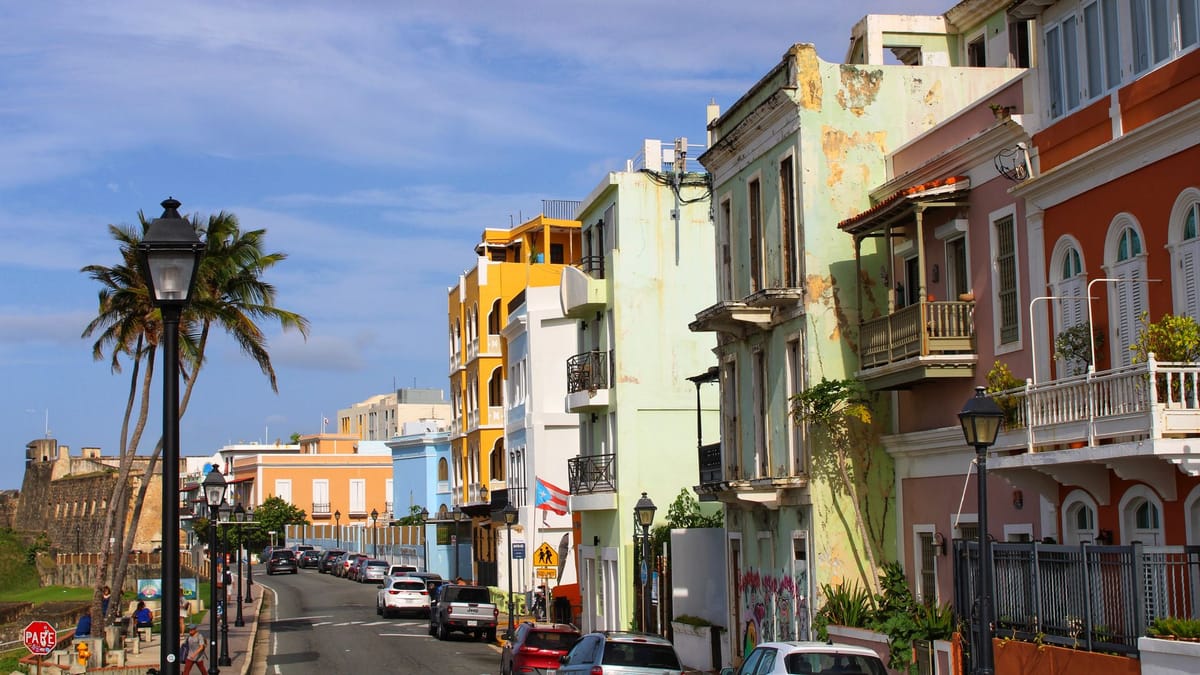
Inside the walls, the Centro Historico is genuinely beautiful and almost entirely given over to visitors. Balconied houses in ochre and coral, bougainvillea, horse carriages and a very high density of boutique hotels occupy streets that a generation ago held ordinary residential and commercial life. Prices inside the walls bear no relationship to prices two kilometres away.
The hawking is relentless and is the single most common complaint recorded by visitors. Sellers of hats, sunglasses, bracelets, massages and photographs with fruit vendors in traditional palenquera dress work the main squares continuously, and the photographs in particular are a paid transaction that is frequently not disclosed until afterwards. A firm and repeated no is the only thing that works; politeness is read as interest.
The heat is the other underestimated factor. Cartagena sits at ten degrees north on a humid coast and there is no cool season, only a dry one from roughly December to April. Sightseeing between eleven and four is unpleasant regardless of month, and the city’s rhythm reflects that: mornings and evenings are for walking, the middle of the day is for being indoors.
Bocagrande, the high-rise strip on the peninsula, is where much of Cartagena’s own middle class actually lives and eats, and it looks like Miami rather than a colonial port. It is worth an evening for perspective, and for restaurant prices that have not been set for cruise passengers.
Getsemani was discovered some time ago
Getsemani, immediately outside the walls, was until recently the neighbourhood recommended as the authentic alternative to the Centro, and every guide now says so, which has had the predictable effect. The murals on Calle de la Sierpe, the evening gatherings in the Plaza de la Trinidad and the hostel scene along Calle del Pozo are now a well-established circuit.
It remains the more interesting half of the historic core, largely because a residential population is still present and visible, playing dominoes and football in the square while visitors drink around them. That coexistence is precisely what is being eroded, and long-standing residents have been priced out at a rate that local reporting has documented.
Visitors report that the neighbourhood changes character noticeably after dark, and that the advice to stay on the main and populated streets late at night is sound rather than nervous. The UK Foreign Office notes that pickpocketing and mugging are problems on the Caribbean coast, that only licensed or app-booked taxis should be used, and that drug-facilitated robbery using scopolamine is a documented pattern across Colombia, with dating apps used systematically to isolate foreign visitors.
The Rosario Islands are further and rougher than the brochures suggest
The Islas del Rosario, a coral archipelago some forty-five minutes to an hour and a half offshore depending on the boat, are sold on every corner of the old city as a day trip with white sand and clear water. Both exist. So does a crossing that is frequently rough, in open boats with hard seats, and a day structured around a fixed schedule that returns everyone to the same jetty at the same time.
The islands sit within a national natural park, and the corals have suffered significantly from sedimentation, bleaching and the sheer volume of boat traffic. Visitors expecting Caribbean reef diving of the standard found off Providencia or Bonaire will be disappointed. Those expecting a pleasant beach day with decent snorkelling will not.
The cheapest tours are cheap for reasons that emerge during the day: compulsory lunch stops at a fixed price, aquarium entry sold as an extra, and beach clubs charging separately for the loungers. Booking a single-island transfer with a stay of a night or two, rather than a bundled day trip, is consistently the better experience and is not much more expensive.
Playa Blanca on Baru, reachable by road as well as water, is the other standard excursion and is now heavily developed, crowded and aggressively hawked. The quieter beaches of the archipelago exist, but they are on islands with accommodation rather than on the day-trip route.
Sources: UNESCO World Heritage: Port, Fortresses and Group of Monuments, Cartagena · UK FCDO travel advice: Colombia safety and security · Cartagena Explorer: Castillo de San Felipe visitor guide · Donde.co: attractions in Cartagena de Indias, admission and opening times