Iceland now charges by the kilometre, which changes the Ring Road maths
Route 1 circles Iceland in roughly 1,300 kilometres of mostly two-lane road, and for two decades the calculation for driving it has been simple: rent a car, buy petrol, sleep somewhere. That calculation changed on the first of January 2026, when Iceland replaced fuel excise duty with a distance-based road charge levied on every vehicle regardless of what it burns. The Ring Road is not more expensive by an enormous margin, but the cost has moved from the pump to the odometer, and anyone planning detours needs to know it.
What the road now costs
- A kilometre charge of ISK 6.95 per km applies to all vehicles from 1 January 2026
- Petrol and diesel excise duties have been reduced or removed in exchange
- Rental companies typically add their own per-kilometre administration fee on top
- Lodging tax is ISK 800 per night at hotels and guesthouses, ISK 400 at campsites
- Cruise operators pay an infrastructure charge of ISK 2,500 per passenger per day
The kilometre charge that arrived in January 2026
Iceland’s road charge is set at ISK 6.95 per kilometre and applies to every vehicle on the network. The stated logic is that electric and plug-in hybrid vehicles had grown to a share of the fleet where fuel duty no longer funded road maintenance fairly, and the change was paired with reductions in excise on petrol and diesel so that pump prices fell.
Hire car customers do not need to register anything themselves. Rental firms report distances to the tax authority and pass the charge through on the final invoice, generally with a service fee of their own added per kilometre. Hertz Iceland, for example, publishes the government rate and its own supplement as two separate lines.
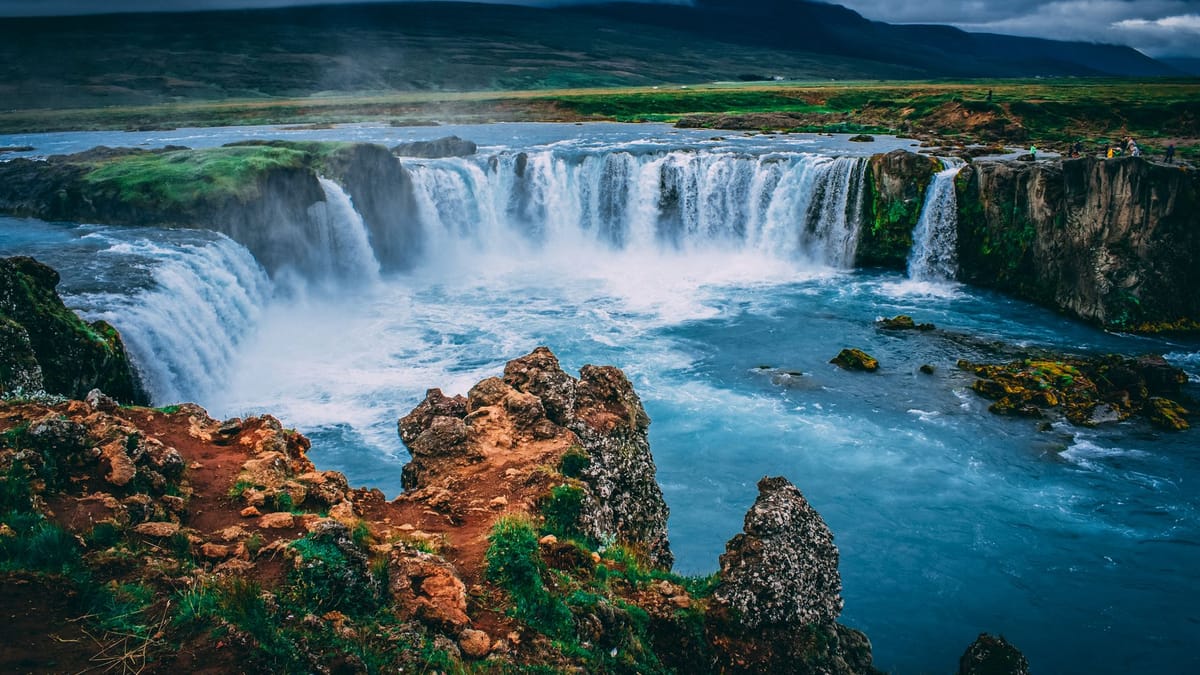
The arithmetic is worth doing before designing a route. A fairly standard week-long circuit of 1,500 kilometres attracts something in the region of EUR 75 in charges before the rental company’s margin, which is not ruinous but is enough to make a 200-kilometre detour to a single waterfall a considered decision rather than an idle one.
Route 1 is not a motorway and never pretended to be
The Ring Road is single carriageway for almost its entire length, with numerous single-lane bridges, blind summits marked as blindhaed, and long unfenced sections where sheep have right of way in practice if not in law. Speed limits are 90km/h on sealed rural roads and 80km/h on gravel, and both are enforced by camera.
Sections of Route 1 remain gravel, particularly in the east around the fjords, and the surface changes without much warning. Rental insurance in Iceland routinely excludes damage from gravel, sand and ash, and the supplementary policies covering those are among the few upsells worth buying.
Winter driving is a genuinely different activity. Studded tyres are standard from roughly November to April, daylight in December runs to about four usable hours, and closures on the north and east sections are common rather than rare.
F-roads are a separate country with separate rules
The highland F-roads are not the Ring Road with more gravel. They are unmaintained mountain tracks that require a four-wheel-drive vehicle by law, and driving a two-wheel-drive car on one voids the rental insurance entirely regardless of whether anything goes wrong.
They open when the Icelandic Road and Coastal Administration decides they have dried out enough, which typically falls somewhere between mid-June and early July depending on the snowpack, and they close again with the first serious autumn weather. There is no fixed calendar, and published dates from previous years are a poor guide.
Unbridged river crossings are the specific hazard. No standard Icelandic rental policy covers water damage to an engine, the cost of a drowned vehicle is borne entirely by the driver, and rescue teams recover several every summer from crossings that looked passable.
Two websites that matter more than any itinerary
Umferdin.is, run by the Icelandic Road and Coastal Administration, is the authoritative live map of road status, closures and surface conditions, and it carries a telephone service on 1777 for anyone who prefers to ask. It is updated constantly through winter and is the only source that should be trusted about whether a road is open.
Safetravel.is, operated by the Icelandic Association for Search and Rescue, publishes trail conditions, weather alerts and travel plans. The organisation maintains roughly a hundred volunteer rescue teams and around four thousand volunteers, a scale that reflects how often visitors need them. Filing a travel plan before any highland walk costs nothing and is standard practice among Icelanders.
The lodging tax and the cruise levy
Iceland reinstated its lodging tax from January 2025 at ISK 800 per unit per night for hotels, guesthouses and licensed accommodation, and ISK 400 for campsites, motorhome parks and caravan facilities. It is charged per room or pitch rather than per person, which makes it a marginal cost for couples and a negligible one for families.
The more consequential change was aimed at cruise ships. International operators now pay an infrastructure charge of ISK 2,500 per passenger for each day the vessel remains in Icelandic waters, and reporting from the sector suggests this has already reduced calls at smaller rural ports. Visitors arriving by air will not notice it; harbour towns in the east and north certainly have.
Reykjanes, and what the eruptions actually affect
The Reykjanes peninsula has seen repeated eruptive episodes since 2021, and coverage of them has been consistently more alarming than the situation on the ground. Keflavik airport has continued operating throughout, and the Ring Road itself lies well clear of the affected fissures.
The practical impact has been localised: intermittent closures of the Blue Lagoon and the town of Grindavik, and occasional diversions on peninsula roads. Anyone building an itinerary around Reykjanes specifically should check status before travelling; anyone driving Route 1 will most likely never encounter it.
Planning the circuit without wasting the days
- Decide direction first: anticlockwise puts the crowded south coast at the start, clockwise saves it for the end when driving confidence is higher.
- Allow a minimum of eight days for the full circle, and ten if the Westfjords or Snaefellsnes are included.
- Book accommodation in the east and north well ahead, since supply outside Reykjavik and Akureyri is genuinely thin.
- Check umferdin.is the evening before each driving day and again in the morning, not once at the start of the trip.
- Add gravel and sand-and-ash protection to the rental, and decline the rest of the counter upsell.
- Budget for the kilometre charge as a line item alongside fuel rather than assuming it is included in the quoted rental price.
Sources: Icelandic Road and Coastal Administration traffic information · Iceland Revenue and Customs: lodging tax · Hertz Iceland: guide to Iceland’s new road tax 2026 · Safetravel, Icelandic Association for Search and Rescue · Iceland Review: tourism sector raises concerns over proposed fees